STOL Drag Racing - Fly Down, Turn Around, Come Back Fast
By Willie Bodenstein
26.09.2026
Google Banner Ad
When it first began, the concept was simple: “Fly down, turn around, come back fast.” What could possibly be so special about that? Quite a lot, as it turns out.
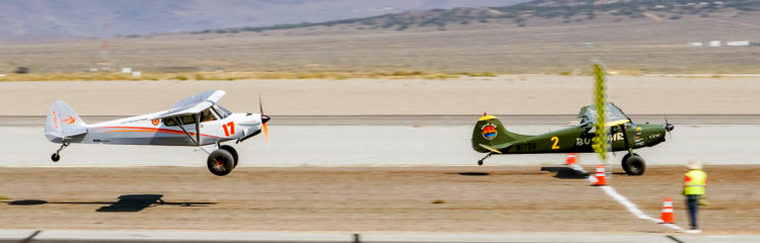
STOL Drag Racing is a unique form of motorsport that combines the precision of short take-off and landing (STOL) flying with the excitement of head-to-head drag racing. It is a race where pilots must manage power, energy, speed and altitude while landing precisely, stopping quickly, turning around and getting back to the finish line before their opponent.
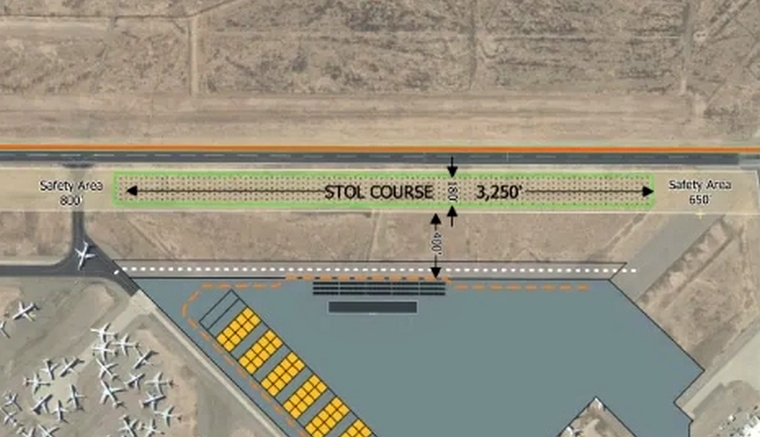
A typical STOL Drag course consists of a 2,000-foot race strip with 1,000-foot overruns at either end. Two aircraft line up side-by-side. At the start, both pilots accelerate and take off, flying down the designated course before setting up for a precise landing.
The aircraft must touch down on or beyond the marked landing line. Landing short results in disqualification. Once on the ground, the pilot immediately works to dissipate the remaining energy using wheel braking and other techniques before bringing the aircraft to a complete stop, on runway heading, with the tail down.
Then comes the part that makes STOL Drag Racing so different. The aircraft turns through 180 degrees and accelerates back down the course. The pilots once again have to land on or beyond the designated line and bring their aircraft to a complete stop, tail down, in their respective lanes.
The first pilot to complete the return run and come to a full stop wins.
From STOL Competition to Aerial Drag Racing
The idea behind STOL Drag Racing was to make traditional STOL competitions more exciting for both competitors and spectators.
Traditional STOL competitions are impressive demonstrations of aircraft control. Pilots attempt to take off and land in the shortest possible distance, often aiming to stop as close as possible to a designated line.
But there is a problem when it comes to spectators. Unless you are standing close to the start or finish line, much of the action can be difficult to appreciate. As Kevin Quinn reportedly observed, traditional STOL competition was not really a spectator sport. That led to a simple question: why not race the aircraft against each other?
The concept was straightforward: line up two aircraft side-by-side, send them down the course and have them race back. And so STOL Drag Racing was born.
What had traditionally been a test of individual aircraft and pilot precision became a head-to-head contest where every second and every foot mattered.
Although it looks like an aerial drag race, STOL Drag Racing requires considerably more than simply applying full power and going as fast as possible.
Pilots must constantly manage energy, power, airspeed, altitude and direction. They must judge their approach accurately enough to touch down beyond the designated line while still having enough control and braking authority to stop the aircraft quickly.
The return run demands the same precision all over again.
For pilots, the discipline can reinforce important flying skills, including energy management, directional control, altitude control and spot landing techniques. Being able to accurately dissipate energy and place an aircraft on a predetermined point can be particularly valuable when dealing with abnormal or emergency situations.
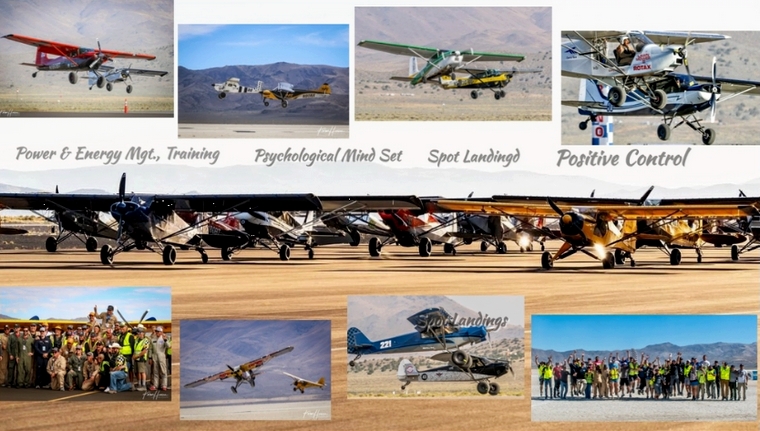
STOL Drag Racing features a fascinating variety of lightweight backcountry and experimental aircraft. Some are highly modified, while others are purpose-built machines designed specifically for racing.
A high power-to-weight ratio is a major advantage. Acceleration, short-field performance and the ability to lose speed rapidly are all critical.
Stopping an aircraft at the end of a run can be just as important as getting it airborne in the first place. Pilots may use immediate power reduction, aggressive wheel braking and other aircraft-specific techniques to shed speed rapidly after touchdown.
The result is a competition where aircraft design and pilot technique are closely intertwined.
What began as an idea to make STOL competitions more exciting has developed into a nationally recognised racing discipline in the United States and has become part of the modern air-racing scene.
STOL Drag Racing was also introduced to the Reno Air Races, becoming the newest race class to join the event in more than two decades.
Unlike conventional air racing, where maximum speed is often the overriding objective, STOL Drag Racing is about precision as much as performance.
A pilot can have the fastest aircraft on the course and still lose by making a mistake at the landing line, failing to stop completely, turning prematurely or crossing a boundary.
At the recently held National Championship Air Races in Roswell, Rod Hewitt was crowned National Champion, with Eddie Sanches finishing close behind and rookie racer Ronnie taking third place.
With spectators watching the close-fought racing at Roswell, it is becoming increasingly clear that STOL Drag Racing has developed far beyond its original concept.
It combines the spectacle of a drag race with the skill of precision flying-and, most importantly, it gives spectators something that traditional STOL competitions have sometimes struggled to provide: a race where the outcome is visible from start to finish.
Fly down. Turn around. Come back fast. And make sure you stop first.