The A-10 Warthog: The aiming magic behind the gun
By Willie Bodenstein
15.11.2027
Google Banner Ad
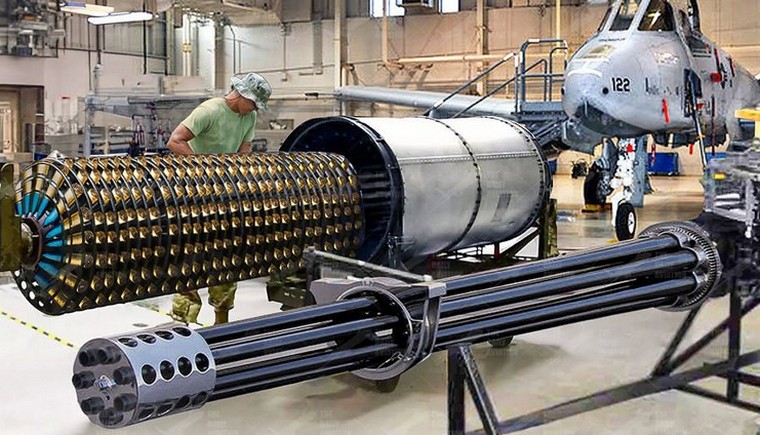
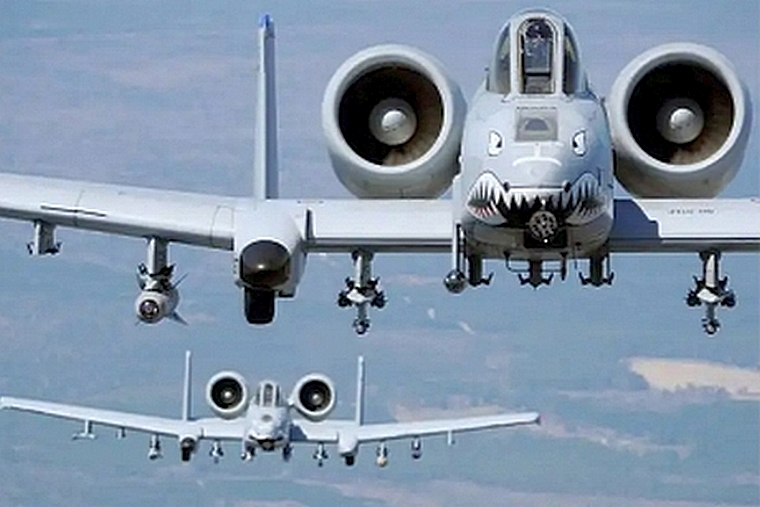
The Fairchild Republic A-10 Thunderbolt II, affectionately known as the Warthog by its pilots and ground crews, is one of the most recognisable military aircraft ever built. Designed specifically to provide close air support to ground forces, it was developed to attack enemy tanks, armoured vehicles and other ground targets while operating in an environment where it could be exposed to considerable enemy fire.
But while much attention is usually focused on its enormous 30 mm GAU-8/A Avenger cannon, there is another remarkable piece of technology working behind the scenes: the aircraft's weapons aiming and fire-control system.
How does the pilot know exactly when to fire the cannon so that its stream of armour-piercing ammunition reaches the intended target? After all, the aircraft does not have a conventional radar constantly measuring the distance to everything on the ground.
The answer lies in some clever computer calculations, a little geometry and a system known as Continuously Computed Impact Point (CCIP). A computer that predicts where the bullets will land.
Imagine throwing a ball towards a dustbin. You instinctively judge how hard to throw it, how far away the bin is and how high or low you need to aim. You also know that gravity will pull the ball downwards as it travels. The A-10's computer does something similar, but considerably more accurately and continuously.
CCIP stands for Continuously Computed Impact Point. In simple terms, it is a system that calculates where a weapon will hit the ground if the pilot releases or fires it at that particular moment.
The computer takes into account information such as the aircraft's altitude, speed, direction and attitude, together with the height of the target and the known flight characteristics of the weapon being used. It then works out where the weapon is expected to strike the ground.

How does it know how far away the target is? This is where the clever mathematics comes in, but the principle is easier to understand than the terminology suggests.
The pilot or weapons system must first establish the target's elevation - in other words, its height above sea level. This information can come from maps or other targeting equipment. The aircraft already knows its own altitude through its onboard instruments. By comparing the two, the computer can establish the vertical difference between the aircraft and the target.
It also knows the aircraft's angle of attack or dive angle and its direction of travel. Using this information, it can calculate the approximate distance between the aircraft and the target, even without using radar to measure that distance directly.
Think of looking down from a tall building at a car parked some distance away. If you know how high up you are and the angle at which you are looking, you can work out how far away the car is. The A-10's computer applies the same basic principle, although with far more information and much more sophisticated calculations allowing for gravity and the weapon's flight.
However, knowing where the target is located is only part of the job.
A bullet does not travel in a perfectly straight line towards the target. Once it leaves the cannon, gravity begins pulling it downwards. Its speed also changes as it travels through the air, which creates drag. The computer has information about the ammunition's ballistic characteristics and uses this to predict how the rounds will travel. It also considers the aircraft's movement and other relevant factors, including wind estimates, to refine its calculations. All these calculations are continuously updated as the aircraft moves.
So how does the pilot see all this information?
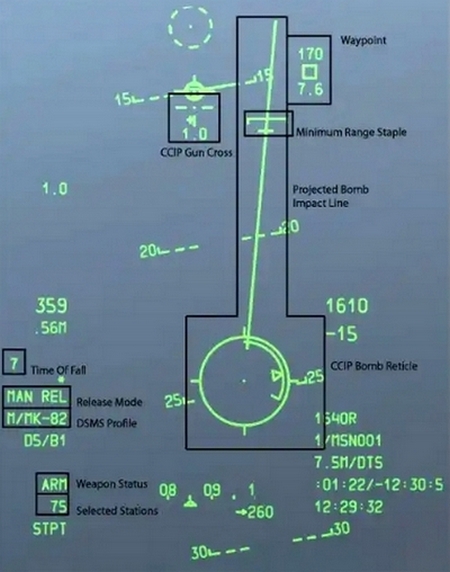
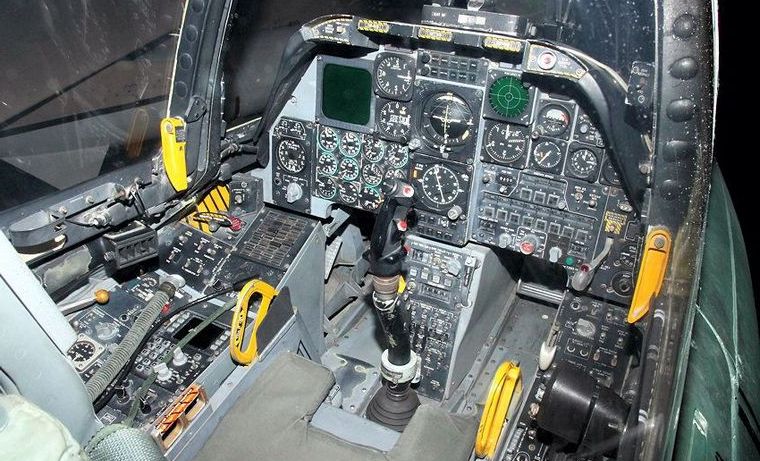
Much of it is presented on the Head-Up Display (HUD), the transparent display in front of the pilot through which important flight and weapons information can be viewed without having to look down at the cockpit instruments.
The HUD displays a collection of symbols, including a circular aiming reference and a small marker commonly called the pipper. The pipper represents the computer's predicted impact point. As the aircraft approaches the target, the computer continually moves the predicted impact marker to reflect changing flight conditions. The pilot uses this information to position the aircraft correctly. When the pipper is placed over the intended target, the pilot knows that firing at that moment should result in the ammunition reaching the calculated impact point.
In other words, the computer does the complicated mathematics while the pilot concentrates on flying the aircraft and making the decision to engage.
The A-10's CCIP system is an excellent example of how modern military aircraft combine basic principles of physics with sophisticated electronics to help pilots deliver their weapons accurately.
It is worth remembering that the A-10 has several weapons employment modes, and CCIP is not the only way its weapons can be aimed. Different weapons and targeting situations require different methods.
The next time you see an A-10 making a low-level pass, remember that behind the distinctive cockpit and enormous cannon is a computer constantly calculating, predicting and updating where the aircraft's weapons are expected to land.
What might look like a simple aiming exercise to someone watching from the ground is actually a remarkable combination of flying skill, mathematics and technology.

Google Banner Ad
|
        |