A 1930s Pocket Rocket - The Chester Jeep
By Willie Bodenstein
08.11.2026
Google Banner Ad
Small, sleek and built with one purpose in mind - speed. The Chester Jeep was one of those remarkable little aircraft that demonstrated just how much performance could be extracted from a relatively modest engine. Designed and built by American aircraft designer and racing pilot Art Chester, this diminutive racer became a familiar competitor on the American air-racing circuit during the 1930s.
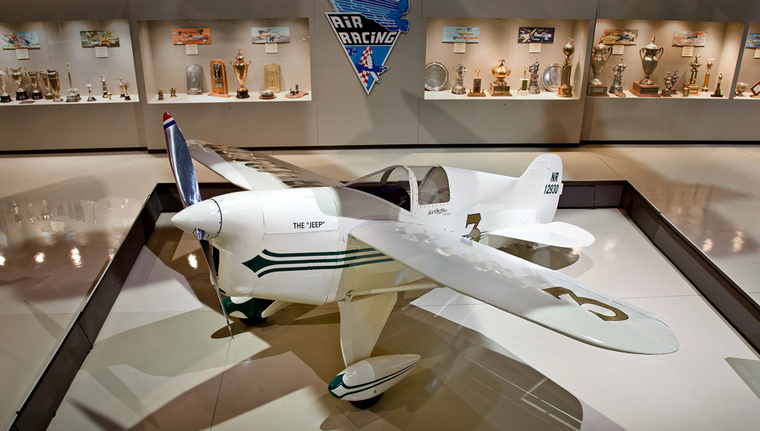
Originally known as the Chester Special, the aircraft was designed for the 1932 National Air Races. It was named after Eugene the Jeep, the mysterious, dog-like character from the popular Popeye comic strips. The name would prove particularly appropriate for an aircraft that was small, unusual and capable of surprising feats.
The Chester Special was a mid-wing, single-seat taildragger with a compact fuselage and small supporting wing struts. Its construction combined a welded steel-tube fuselage with plywood and fabric-covered wooden wings. Power initially came from a 185 hp Menasco C4-S inverted, air-cooled, four-cylinder inline engine.
Although the aircraft was completed in 1932, it was not ready for the National Air Races that year. It made its first flight on 14 August 1932, but testing revealed that several improvements were needed before it could become competitive. Chester subsequently undertook extensive modifications, shortening the wings and fuselage and making changes to the cockpit and engine cowling.
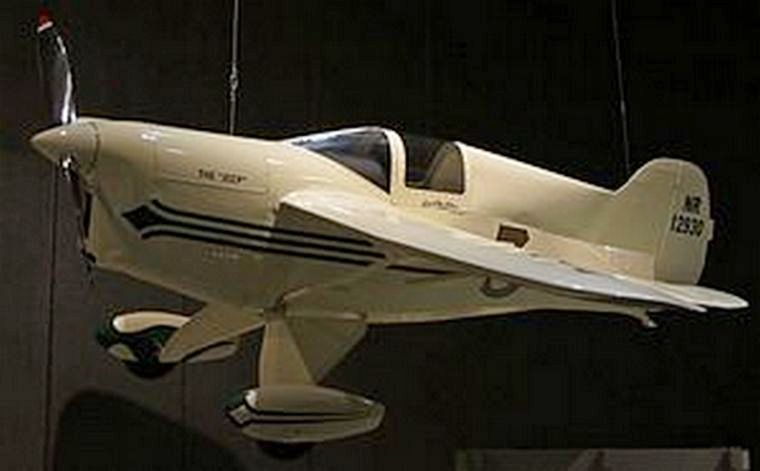
The little racer made its competitive debut at the 1933 National Air Races. Competing in the 375-cubic-inch engine class, Chester secured first place in one race and fourth place in four others. Its best speed during the event was approximately 155 mph (249 km/h).
Later that year, the aircraft also competed at the Chicago races, where it continued to demonstrate its potential.

Chester was constantly refining his creation, and the improvements paid off. During the 1934 season, the aircraft achieved 229.72 mph (370 km/h) in the Shell Speed Dash. It also performed strongly at the National Air Races in Cleveland, placing second in several 375-cubic-inch events and third in two races in the larger 550-cubic-inch class.
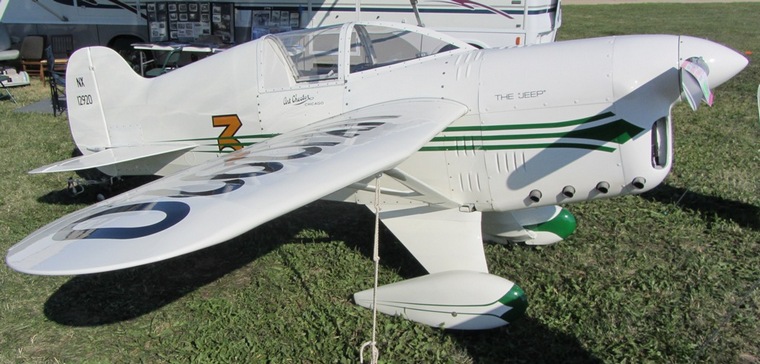
The 1935 season brought further success. Chester secured first place in a 375-cubic-inch race at the National Air Races and also achieved a first-place finish at the Miami Air Races. The following year saw more competitive results, with the aircraft continuing to hold its own against machines powered by considerably larger engines.
By 1936, the Chester Special had undergone further development and appeared under the name by which aviation enthusiasts would remember it: the Jeep. Its performance continued to improve, eventually reaching speeds in excess of 230 mph (370 km/h), with published figures placing its best speed at approximately 235 mph (378 km/h).

Chester continued racing the Jeep through 1937, when it achieved further podium finishes. For such a small aircraft competing against more powerful machines, this was an impressive record.
The Jeep's original racing career came to an end when Chester sold it to Tom Stauch. Stauch intended to enter it in the 1939 National Air Races, but the entry was rejected because the necessary paperwork had not been submitted correctly.
The aircraft disappeared from the racing scene until 1947, when it reappeared after a major rebuild. Its original 185 hp Menasco engine had been replaced by an 85 hp Continental, and extensive modifications had transformed it into a Goodyear Formula One racer. So extensive were the changes that little of the original Chester Special remained beyond its registration and tail section.

In 1977, the aircraft's remains were acquired by Art Kilps, who donated them to the Experimental Aircraft Association (EAA) in Oshkosh, Wisconsin.
EAA member Henry Proescher subsequently undertook the painstaking task of restoring the aircraft to its 1936-37 racing configuration. The restoration took more than six years to complete, and the beautifully restored Chester Jeep eventually became part of the EAA Aviation Museum's collection, where it remains on display.
From its modest beginnings in Art Chester's garage to its days competing against some of America's fastest racers, the Chester Jeep remains a fascinating reminder of an era when ingenuity, determination and a willingness to experiment could turn a small home-built aircraft into a formidable racing machine.


Google Banner Ad
|
         |