This Week in Midweek Updates
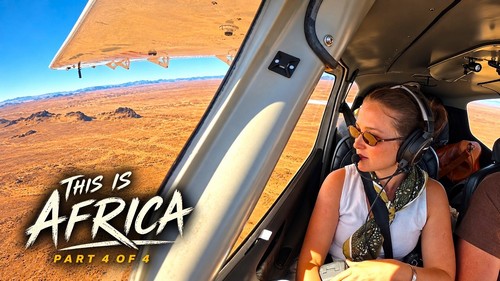
SLING Aviation101's this Is Africa: Part 4.
Share your Sling story and win a sling store hamper!
Airlines Association of Southern Africa calls time on talk, urges execution to turn potential into aviation growth.
Northrop Grumman advances autonomous airpower with first Talon Blue Flight.
First Moroccan F-16 Block 72 takes to the air ahead of deliveries.
Stratolaunch expands hypersonic flight test infrastructure with acquisition of Boeing 777 Carrier Aircraft.
This week in history - A specially modified McDonnell Douglas F-15 Eagle sets eight time to climb records.
Worldwide Incidents and Accidents
Bonus video - Rob's Mustang
Sling- Aviation101's this is Africa: Part 4
After twenty-five days, countless flights, three countries and more adventures than we ever could have planned for, the African flying adventure of Josh Flowers and Chelsea Smith of Aviation101, along with Chris Lammert and Keelyn Costello, has reached its final chapter. But there's still plenty of Africa left to explore.
They continue across Namibia by air, from remote desert camps and towering dunes to the Atlantic coast and the wildlife-rich plains of Etosha National Park. First, though, they need fuel.
And when you're travelling with four aircraft in the middle of Namibia, getting 400 litres of petrol from a roadside station into all of them becomes an adventure all on its own.
Along the way, they meet two people who have never flown before - and get the chance to give them an entirely new view of the place they call home. After one last night around the campfire, it's time to say goodbye to their friends and continue the journey on their own.
They follow Namibia's spectacular coastline, fly past the Eduard Bohlen shipwreck and make their way to Swakopmund before turning inland toward the private airstrip at Okutala.
Then comes one final unforgettable day: exploring Etosha National Park from the ground, surrounded by elephants, zebras, and the quiet moments that make you stop, watch and simply take it all in.
And somewhere between the desert, the wildlife, the friendships and the endless skies, the realisation sets in, says Josh.
"This was never just a flying trip. It was a childhood dream come true. Twenty-five days across Zimbabwe, South Africa, and Namibia. New friendships. Incredible places. Countless memories. And an experience Chels and I could never have imagined when we first packed our bags.
To everyone who welcomed us along the way, flew with us, shared their homes, their stories, and their country - thank you. And to everyone who followed the journey from home, thank you for coming along for the ride. Now it's time to head home."
Watch this is Africa - Part 4 of 4!
Watch the full video on YouTube NOW!
Share Your Sling Story and Win a Sling Store Hamper!
Fly and Snap. Tag and Win.
Slingers, we're excited to kick off the next round of our #takingyouplaces competition - and yes, you could be our next winner.
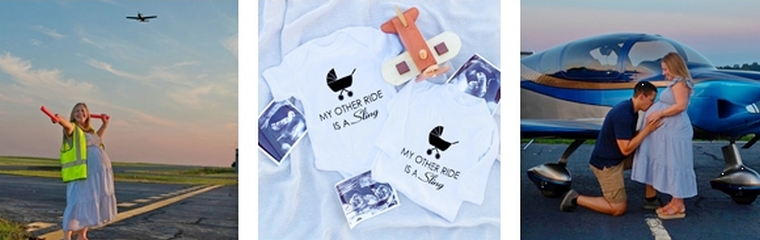
First up, a huge congratulations to Ryan and Alissa McCormack from the USA, our latest winners! This husband-and-wife duo followed all the steps, shared their Sling journey with us, and walked away with a fully loaded Sling Store hamper including, matching onesies for their soon-to-be-born twins! Proof that Sling really is taking people (babies included) places - all over the world.
Now… it's your turn.
The next winner will be drawn December 9th, and entering couldn't be easier.
“Taking You Places” is more than a slogan. It's about the journeys, the people, and the memories made along the way.
We want to see:
Your adventures close to home or across the world.
In the air or on the ground.
Big moments or everyday magic.
Wherever your Sling takes you - show us.
How it works:
• POST your videos and pictures on Facebook or Instagram.
• TAG US @slingaircraft on Facebook or @sling_aircraft on Instagram.
• Use the HASHTAG #takingyouplaces.
We'll reshare our favourites, and December 9th, one standout post will win a Sling Store hamper. So, grab your camera, capture the moment, and let us see the world through your lens.
Because at Sling, we're not just building aircraft.
We're Taking You Places.
Airlines Association of Southern Africa Calls Time on Talk, Urges Execution to Turn Potential into Aviation Growth
Africa must move decisively from ambition and talk to execution, if aviation is to fulfil its potential as a catalyst for intra-African trade, tourism and economic growth, Airlines Association of Southern Africa (AASA) CEO, Aaron Munetsi, told delegates at the organisation's 56th Annual General Assembly (AGA) in Mauritius today.
Mr Munetsi said Africa's young, dynamic and rapidly expanding population represented an enormous opportunity not only for aviation but for economic growth and inclusion. He noted that that the industry continued to operate well below its potential. World Bank and OECD studies predict around 300 million people will represent Africa's growing middle class by 2030, driving demand for air travel to, from and within the continent.
“We need to design aviation around reasonably priced flights that depart and arrive on time, with convenient business-oriented schedules, that can be purchased using frictionless digital payments compatible with mobile money, offering products suited to traders as well as tourists, using efficient airports and border processes,” he explained.
He warned that Africa can no longer afford the gap between strategies and implementation and as such the aviation sector must lead the charge for intolerance of this anomaly
The industry and governments have spent decades discussing the challenges facing African aviation and commissioning consultants to provide expensive strategies only to leave them unimplemented. Strategies don't move people. Now it is time to make the difficult decisions and execute them,” said Mr Munetsi.
In calling on industry stakeholders, governments and regulators to move beyond discussion and deliver measurable action, AASA identified five urgent and measurable action items to stimulate sustainable growth in Africa's passenger and air cargo sector:
• Make safety non-negotiable with investments in resources, effective oversight, training and zero tolerance for shortcuts.
• Contain costs and reign-in aviation-related taxes, fees and charges and avoid introducing new ones.
• Modernise and maintain airports and other aviation infrastructure for efficiency and apply affordable user-charges for those services.
• Eliminate anti-competitive and protectionist restrictions on market access and implement the Single African Air Transport Market (SAATM). Liberalisation must move beyond declarations and become a practical reality.
• Standardise regulations, recognise licences and harmonise procedures across borders.
Munetsi stressed that the value generated by aviation extends far beyond the airlines themselves.
“Efficient air connectivity increases trade, passenger traffic and tourism while helping Africa trade more effectively with itself. Aviation does not just deliver passengers. We deliver the catalytic effect to economies.” he said.
About AASA
The Airlines Association of Southern Africa (AASA) represents most of the airlines in the SA Development Community bloc on matters of common interest relating to government policies, legislation, regulations, planning, operational efficiency, safety, security, taxes, charges and other matters affecting its members' sustainability and the provision of affordable and accessible air transport throughout the region.
AASA was established in 1970 and currently has 15 airline members and 42 associate members, including infrastructure service providers, aircraft and engine manufacturers and other industry suppliers, ground handling companies and allied industry bodies.
AASA is a regular participant and contributor to the International Civil Aviation Organization (ICAO) and International Air Transport Association (IATA) and supports their initiatives in the region.
Northrop Grumman Advances Autonomous Airpower with First Talon Blue Flight
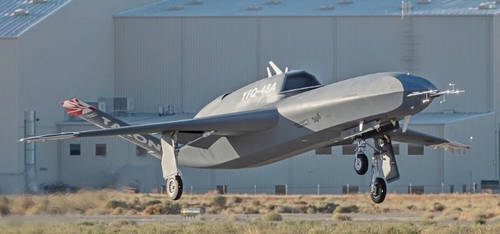
Northrop Grumman's (NYSE: NOC) YFQ-48A Talon Blue completed its first fully autonomous flight, including taxi, takeoff, in-flight maneuvers, and landing. Developed through company investment, Talon Blue combines modular design and advanced manufacturing to lower cost and support faster production without compromising mission capability. The flight builds on Northrop Grumman's seven decades of autonomy experience and more than 500,000 autonomous flight hours, with lessons from Talon Blue informing future autonomous systems.
Details on YFQ-48A Talon Blue:
Talon Blue is part of Northrop Grumman's internally-funded Project Talon portfolio focused on accelerating the development of mission-ready autonomous airpower capabilities.
Manufacturing and design innovations cut part count and overall weight, lowering cost and enabling faster production to meet growing demand for autonomous systems.
Designed with flexible operational concepts in mind, Talon Blue's high air intake, wide wheelbase and integrated weapons bay support a wide variety of mission needs for U.S. and allied partners.
Northrop Grumman Advances Autonomous Airpower with First Talon Blue Flight
Northrop Grumman's YFQ-48A Talon Blue demonstrates a successful fully autonomous flight, including taxi, takeoff, in-flight maneuvers, and landing in Mojave, Calif. (Photo Credit: Northrop Grumman)
The Project Talon portfolio includes Talon IQ™, a cutting-edge autonomous testbed operating on the Scaled Composites Model 437 aircraft. Powered by Northrop Grumman's Prism Mission Autonomy software, Talon IQ offers an accessible government reference architecture that accelerates autonomy maturation while reducing the time and cost to bring new mission capabilities forward.
Together, Talon Blue and Talon IQ allow Northrop Grumman and its partners to rapidly develop, test and field autonomous capabilities tailored to meet emerging threats and operational requirements.
First Moroccan F-16 Block 72 Takes to the Air Ahead of Deliveries
By Guy Martin/ADIT - The Bulletin www.defenceweb.co.za
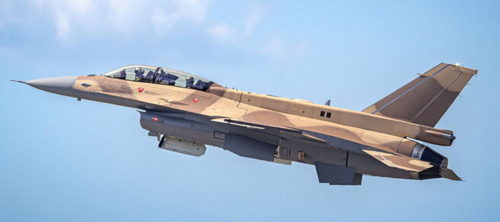
The first new Block 72 F-16 Fighting Falcon for the Royal Moroccan Air Force (RMAF) has made its maiden flight as Lockheed Martin prepares for first delivery.
The company on 6 October announced what it said was a key milestone in the programme as the aircraft progresses through flight testing.
“This first flight reflects meaningful progress on Morocco's F-16 Block 72 programme and is a critical step in strengthening Morocco's future airpower,” said Mike Shoemaker, vice president and general manager of Lockheed Martin's Integrated fighter Group. “The F-16 remains a vital component of today's and future air defence, and we're proud of the role it will continue to play in supporting Morocco's sovereignty and contributing to regional stability for decades to come.”
In March 2019, the US State Department approved the $3.7 billion sale of 25 new F-16C/D Block 72 aircraft to replace the Mirage F1s Morocco received in the 1970s, and the Northrop F-5E/F Tiger IIs it received in the 1980s. The new F-16s are being acquired with APG-83 Active Electronically Scanned Array (AESA) radars, Joint Helmet Mounted Cueing Systems, AIM-120C-7 AMRAAM missiles, Paveway II guided bombs and GBU-39/B Small Diameter Bombs, amongst others. Production by Lockheed Martin of Morocco's new F-16s is expected to conclude by December 2026.
The F-16 Block 72 is the newest and most advanced variant of the Fighting Falcon, equipped with modernised avionics, advanced sensors, improved mission systems, and enhanced safety and reliability features.
The Royal Moroccan Air Force flies 23 F-16C/D Block 50/52 aircraft that it received from 2011 to 2012 (one was lost over Yemen during operations as part of the Saudi-led coalition). The US Defence Security Cooperation Agency in 2019 approved the upgrade of these aircraft to the latest F-16V Block 70/72 standard at a cost of $985.2 million.
Morocco's existing F-16s are equipped with a variety of extra equipment, including Lockheed Martin Sniper targeting pods, Goodrich DB-110 airborne reconnaissance pods and Raytheon's Advanced Countermeasures Electronic System (ACES). Armament includes AIM-9X Block II Sidewinders with lock on after launch capability, AGM-65D Maverick air-to-surface missiles and Enhanced GBU-12 Paveway II laser guided bomb kits. Several years ago Morocco also ordered Harpoon missiles for its F-16s. Last year Morocco requested to buy $175 million worth of AIM-120 AMRAAM air-to-air missiles and GBU-39B Small Diameter Bombs from the United States for its F-16s.
Lockheed Martin said its partnership with Morocco spans more than 50 years, beginning with the first C-130H delivery in 1974. Today, the Royal Moroccan Armed Forces operate F-16s, C-130s, advanced radar systems, Black Hawks, and will be receiving HIMARS systems.
The company added that it is committed to strengthening Moroccan industry and local technical expertise through partnerships such as Maintenance Aero Maroc. The upcoming Maintenance, Repair and Overhaul (MRO) facility at Benslimane, spanning more than 8 000 square meters, is designed to support heavy maintenance and modernization of C-130 Hercules aircraft, with plans to expand to platforms including the F-16. The investment supports Morocco's ambition to become a regional hub for aircraft maintenance, repair and overhaul.
Morocco is aggressively modernising its air force to counter Algiers' formidable arsenal, thanks in part to a large defence budget increase. Complementing acquisitions, Morocco is fostering a burgeoning defence industry through joint ventures, partnerships, and financial incentives.
As the Kingdom increases its defence budget, which has jumped to $15.3 billion in 2026, a 17.7% hike year-on-year, it may be inclined to pursue the modernisation of its air force, which has already been expanded with new systems such as four Gulfstream G550s in an ISR (Intelligence, Surveillance and Reconnaissance) configuration, and various drones including Israeli Heron or Hermes 900, Chinese Wing Loong-2 or Turkish TB2 and Akinci drones.
Morocco has already acquired numerous air defence systems from China, France, Israel, and from the United States, and worked to establish a strong multi-layered network. This network includes a plethora of long range systems (HQ-9B, Barak 8, and Patriot PAC-3), mid-range systems (SPYDER, MICA VL, and Sky Dragon 50) and short range systems (Stinger and Mistral), and is supported by various radar systems such as Ground-Master 400s purchased from France. Similarly, the Moroccan helicopter force has been growing at a steady pace with 36 AH-64E Apache helicopters ordered in 2019 and 10 H225M transport helicopters ordered in November 2025 (the first six arrived in March 2025 and the next six followed in early April this year).
Local industry preparing for defence sector growth
Morocco has been attempting to grow its MRO capabilities for military aircraft and has worked toward locally producing a few military systems. In 2024, Morocco signed an Aerospace Cooperation Agreement with Embraer, with the latter affirming its commitment for collaboration with the Royal Moroccan Air Force to position its C-390 for future Moroccan tactical airlift capabilities, with training, maintenance and logistic support included in the package, and some media outlets reporting even the possibility of partial assembly.
The year after, Baykar also announced the opening of a maintenance, repair and overhaul hub in Morocco, aiming to expand its African reach. While the specific type of drone that would be maintained there was not mentioned, it was deemed that the most likely candidates would include the Bayraktar TB2 and possibly even the Bayraktar Akinci in the future. Recruitment opened in early 2026 for mechanical technicians, electronic technicians or test pilots.
Another milestone was achieved in 2024 when Moroccan company Aerodrive Engineering Services - founded in 2017 - announced that Morocco's first homegrown drone, the Atlas Istar, had completed its maiden test flight.
At the time, this ISR and Target acquisition drone was hailed as a success for the national defence strategy launched by King Mohammed VI, aimed at developing “the manufacture of drones capable of conducting intelligence, surveillance, and armed attacks, in addition to the maintenance of military aircraft.” Back in 2023, The Moroccan Minister in charge of National Defence Administration, Abdellatif Loudiyi, had further emphasised this objective in a report on the proposed defence budget for 2023. The aim is to reduce the country's dependence on military imports. That goes of course beyond simply aircraft. As an example, Indian company TATA has opened an armoured vehicles plant in Morocco for WhAP 8×8 Armoured Personnel Carriers aiming to locally produce as many as 150 vehicles.
To facilitate future investments, and just like it has done for commercial aviation, Rabat has begun establishing several industrial zones dedicated to defence; and Morocco's budget for 2025 exempts defence firms from taxes, in the hope to further boost foreign investments in Moroccan defence. Any upcoming acquisition in that field will undoubtedly include significant offsets and technology transfer clauses.
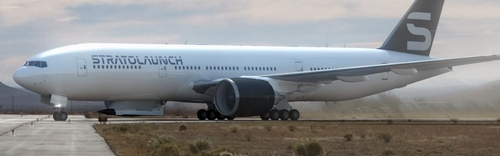
Stratolaunch Expands Hypersonic Flight Test Infrastructure with Acquisition of Boeing 777 Carrier Aircraft
Stratolaunch, a leading pure-play hypersonics company, today announced it has acquired a Boeing 777-200ER, expanding Stratolaunch's fleet of carrier aircraft supporting the company's Talon-A autonomous, reusable, air-launched hypersonic flight test platforms. The addition of the Boeing 777 strengthens the company's flight test infrastructure, increasing global reach and flight capacity to address customer demand, while also enhancing the company's ability to offer additional services.
The acquisition represents another important expansion of Stratolaunch's fleet of carrier aircraft and complements the company's existing carrier assets, the Spirit of Mojave and Roc. With three carrier aircraft, Stratolaunch will be well positioned to maintain continuous launch readiness, boosting overall flight capacity by 35%.
The addition of the Boeing 777 carrier aircraft also increases the company's global deployment capabilities, supporting operations wherever needed around the world. This expanded fleet supports broader mission profiles, reduces scheduling constraints and accelerates the ability to scale flight operations, including conducting parallel missions.
“As demand for hypersonic technologies continues to grow, we're building the operational scale to make routine hypersonic testing a reality for our customers around the world,” said Zachary Krevor, President and CEO of Stratolaunch. “Adding the reliability of a Boeing 777 aircraft to our fleet enhances our flight flexibility and strengthens our long-term capacity as we work to provide the nation and our customers with the test cadence needed to accelerate hypersonic innovation. We look forward to operationalizing the aircraft and expanding our capability to serve customers at the scale and speed required to address hypersonic national security needs.”
The aircraft will undergo modifications to enable the air launch of Stratolaunch's reusable, fully autonomous Talon-A hypersonic test vehicles from its fuselage, with completion expected in 2027.
Stratolaunch's carrier aircraft take Talon-A to altitude before it is air-launched, effectively providing a reusable first stage for hypersonic flight. Compared with traditional ground-launch systems, this approach offers greater range, lower mission costs, flexible deployment and the ability to execute more representative real-world flight profiles.
The acquisition builds on a series of milestones achieved over the past year. In July 2026, the company announced it had surpassed more than 10 successful hypersonic flights with its Talon-A platform, following its February 2026 announcement of a $90.8M contract award under the Department of War Test Resource Management Center (TRMC) Multi-Service Advanced Capability Hypersonics Test Bed (MACH-TB) for air-launched capability test vehicles.
Together, these achievements reinforce the company's commitment to enabling faster, more affordable and more responsive hypersonic test development. Serving government and commercial customers, Stratolaunch aims to expand America's hypersonic testing infrastructure and deliver the vital flight data needed to develop next-generation technologies for national deterrence.
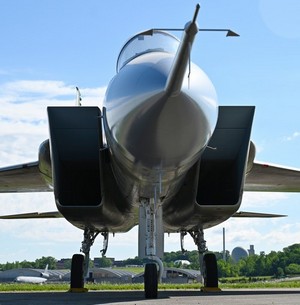
A specially modified McDonnell Douglas F-15 Eagle sets eight time to climb records, including one of 3 minutes 27 seconds from standstill on the runway to a height of 30,000 metres (98,000 feet).
Weight Reduction: Stripped of paint to fly in a natural metal finish, saving about 40 pounds. Equipment Removal: Removed the radar, cannon, missiles, flaps, speed brakes, and internal utility systems to maximize thrust-to-weight ratio.
Too costly to convert back to operational service she was donated to the National Museum of the United States Air Force.
Germany, Eberswalde-Finow Airfield (EDAV), Eberswalde, Schorfheide, Brandenburg : An experimental US registered Lancair crashed into trees shortly after takeoff from Eberswalde-Finow Airfield (EDAV), Eberswalde, Schorfheide, Brandenburg. The pilot perished and the aircraft was destroyed by a post impact fire. Fliegermagazine quotes witnesses statementing, the aircraft experienced intermittent engine power interruptions during the takeoff roll on Runway 10. Despite the apparent loss of engine performance, the pilot continued the takeoff and became airborne. Following lift-off, the aircraft achieved only a marginal rate of climb, consistent with significantly reduced engine power. Shortly thereafter, the pilot initiated a right turn, apparently with the intention of returning to the aerodrome and conducting an emergency landing on Runway 28. During this maneuver, the aircraft passed beyond the extended approach centerline. The pilot subsequently abandoned the attempted runway alignment and entered a shortened left-hand traffic pattern over the town of Finow. While on the downwind leg east of the airfield, the aircraft remained at low altitude, only slightly above the surrounding treeline. During an attempt to intercept final approach for Runway 10, the aircraft again overshot the extended centerline. While maneuvering to correct the deviation, the aircraft entered a loss-of-control condition and descended into wooded terrain near the A11 motorway.
USA, near Hicks Airfield (T67), Fort Worth, TX : A Lancair IV-P, N5SV, was destroyed when it clipped a powerline and impacted terrain shortly after takeoff from runway 14 at Hicks Airfield (T67), Fort Worth, Texas. The pilot was fatally injured. Preliminary ADS-B data shows that the airplane climbed to 950 ft before it initiated a descending left hand turn towards an open field. The airplane struck a powerline and came to rest in a ditch and a post crash fire ensued.